

Team performance framework resource
A practical tool to assess the everyday interactions that contribute to team performance
Introducing our Framework
Performance happens in teams. The best work is done when people get along, when they pull in the same direction and collaborate. When teams struggle, the instinct can often be to look at individuals: who’s performing well, who’s not pulling their weight, and what needs to change?
But the truth is, individual performance alone cannot explain what makes a team effective. Instead it’s driven by the collective behaviour that shapes how well people work together.
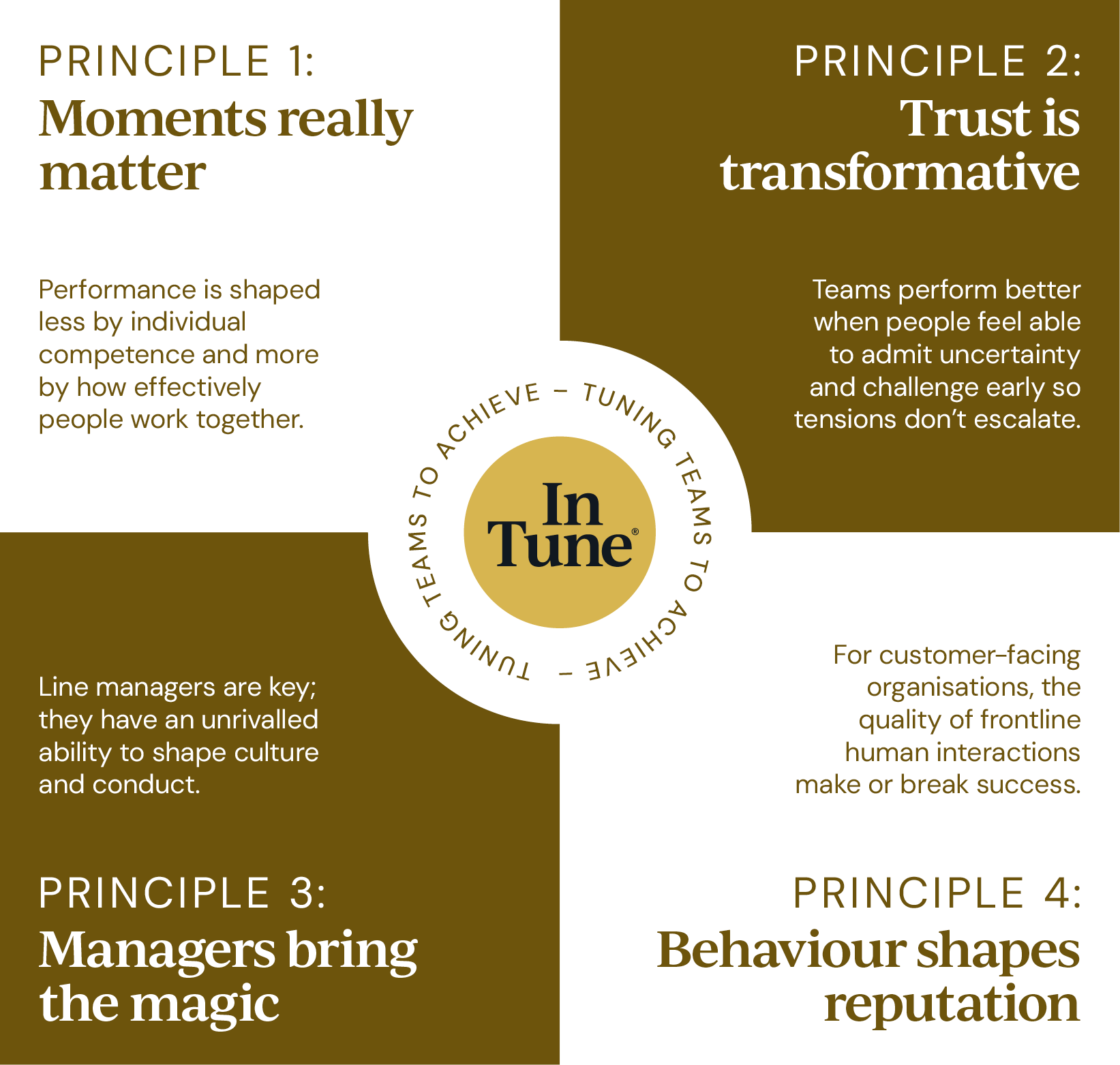
The Team Performance Framework © Zoe Young / Half the Sky
Our Team Performance Framework offers a new perspective. It identifies four principles that underpin effective teamwork, providing a tool for leaders to examine how their teams are working together, recognise where things are going well and identify where more attention or support might be needed.
The framework explores the simple interactions that happen every day that can determine how teams collaborate: how people speak to each other in meetings, how they share information during handover, how they respond under pressure and how they handle disagreements.
These interactions may seem insignificant, but they are powerful. They can strengthen trust, collaboration and confidence – or quietly undermine them.
Together, the four principles offer a practical framework for leaders to understand how everyday interactions, trust, management behaviour and relationships with customers or service users contribute to team performance.
Putting it into practice
How well do these four principles show up in your organisation?
Use these questions to explore how everyday behaviours and working relationships shape team performance. Try them as a discussion tool with senior leaders or managers. Drawing on practical examples and paying attention to differences in experience may reveal where further attention is needed.
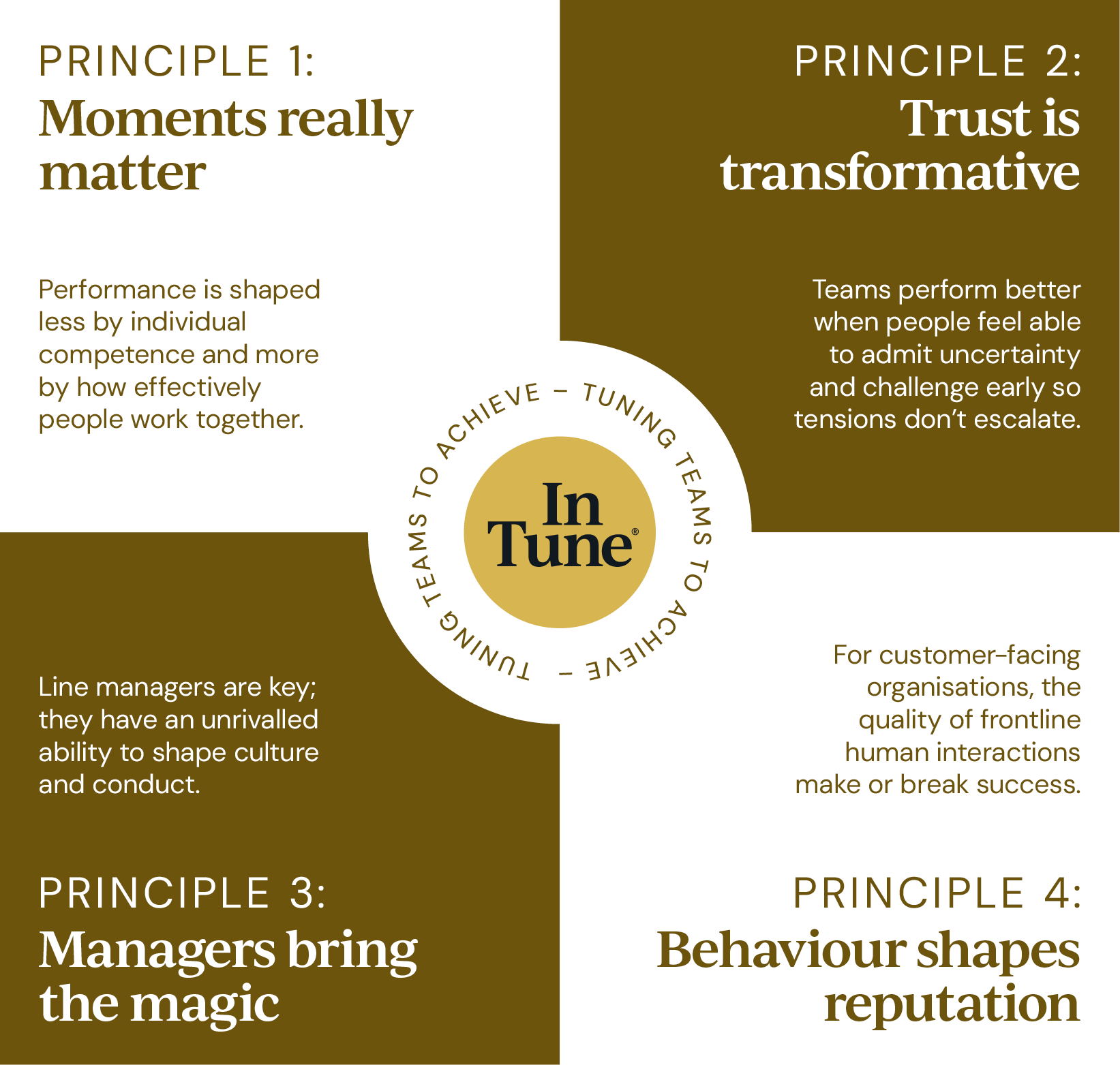
The Team Performance framework © Zoe Young / Half the Sky
Principle 1: Moments matter
Where are you seeing good examples of how your staff communicate, treat one another and work together day to day?
Are there small, repeated behaviours are quietly creating friction or making working together more difficult?
How do positive behaviours hold up when teams are busy or under pressure?
Principle 2: Trust is transformative
How comfortable do people feel saying ‘I’m not sure’ or ‘I disagree’?
When tensions arise, are they surfaced early and handled constructively, or are they left to harden into repeated patterns?
Where are people holding back ideas, concerns or feedback because they are worried about how others may respond?
Principle 3: Managers bring the magic
How consistently are managers actively modelling respectful, inclusive ways of working?
How confident are they to handle conflict, give feedback or have difficult conversations?
What support would help managers respond more confidently and constructively when difficulties arise?
Principle 4: Behaviour shapes reputation
Where do you see examples of warmth and empathy translating into good teamwork and great service?
How might pressures or difficulties within teams be affecting the experience of customers or service users?
If someone observed your frontline teams for a day, what would they say about your organisation’s values?
Want to find out more? Download our insights paper, People Aren’t the Problem, for fresh thinking and a new perspective on managing teams in high-pressure public-facing environments.